
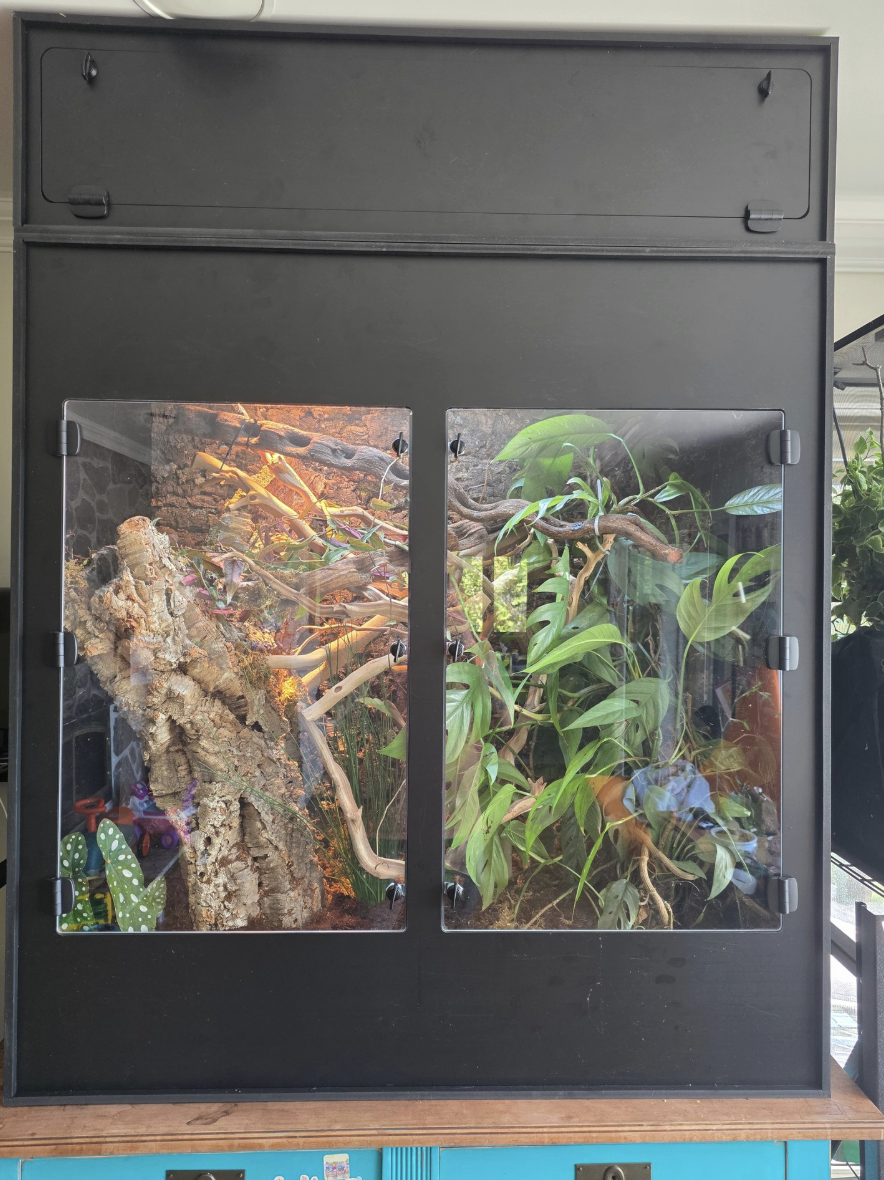
Glass Terrarium vs PVC Enclosure for Corn Snakes: Which Is Right for You?
When I brought home my first corn snake over a decade ago, I made the classic beginner mistake. I walked into a pet store, saw a beautiful glass terrarium on sale, and thought, “Perfect. Glass. I can see the snake. Done.”
I didn’t think about humidity. I didn’t think about heat loss. I definitely didn’t think about how much I’d hate cleaning a top-opening tank.
Fast forward through years of trial and error, multiple enclosures, and enough money spent on “upgrades” to make me cringe, and I’ve finally figured out the real answer to the glass terrarium vs PVC enclosure for corn snakes debate.
And spoiler alert: it’s not a simple one-size-fits-all answer.
Both options have legitimate pros and cons. The right choice depends on your budget, your home environment, your goals as a keeper, and — most importantly — the health and happiness of your corn snake.
In this guide, I’m going to walk you through everything I’ve learned from using both glass and PVC enclosures for my corn snakes. I’ll share the mistakes I made, the wins I celebrated, and exactly what I recommend based on your specific situation.
Whether you’re setting up your first corn snake habitat or upgrading an existing one, this glass terrarium vs PVC enclosure for corn snakes comparison will give you everything you need to make the right call.
Let’s dive in.
My Journey: From Glass to PVC
I’ll never forget my first corn snake setup. It was a 40-gallon glass terrarium with a screen top, a heat mat stuck to the bottom, and a heat lamp clamped to the side. I thought I was a genius.
For about three months, everything seemed fine. My corn snake was eating, shedding, and exploring. I patted myself on the back for being such a natural.
Then winter hit.
Suddenly, I couldn’t keep the temperature above 72°F on the warm side. The humidity dropped to 20% no matter how much I misted. My snake’s sheds came off in pieces instead of one perfect tube. I was panicking, running to the store every week for new solutions, and spending way too much money on temporary fixes.
That’s when I started researching PVC enclosures.
I remember the day I unboxed my first PVC cage. The insulation was incredible. The humidity held steady at 55% without me doing anything. And the front-opening doors? Game changer.
But I also realized that PVC wasn’t perfect. The initial cost hurt. And I missed the crystal-clear view that glass provided.
So which one won in the end? Well, that’s the thing about the glass terrarium vs PVC enclosure for corn snakes question — the answer depends on your priorities.
Let me break down everything I’ve learned.
What to Look For in a Corn Snake Enclosure
Before we compare glass and PVC directly, let’s talk about what your corn snake actually needs from its home.
Corn snakes are native to the southeastern United States. They’re found in pine forests, overgrown fields, and even abandoned buildings. They’re adaptable, hardy, and forgiving — which makes them great for beginners.
But “forgiving” doesn’t mean you should cut corners.
A proper corn snake enclosure should provide:
Temperature Gradient: Your snake needs a warm side (85-88°F) and a cool side (75-78°F) so it can thermoregulate. This means your enclosure needs to hold heat effectively.
Humidity Range: Corn snakes thrive at 40-60% humidity, with a bump to 60-70% during shedding. If your enclosure can’t hold humidity, you’ll fight shedding issues constantly.
Security: Snakes feel safe in enclosed spaces. Solid sides, covered backs, and snug hides reduce stress.
Accessibility: You’ll be cleaning, feeding, and handling your snake regularly. Front-opening doors make this infinitely easier than reaching down from the top.
Visibility: Let’s be honest — half the fun of keeping snakes is watching them explore. The enclosure needs to show off your snake beautifully.
Durability: This isn’t a one-year investment. A quality enclosure should last decades.
Now let’s see how glass and PVC stack up against each other.
Glass Terrariums: The Classic Choice
Glass terrariums are what most people picture when they think “snake tank.” They’re the standard at pet stores, the default recommendation for beginners, and the most accessible option on the market.
But are they actually good for corn snakes?
Glass Terrarium Pros
1. Unmatched Visibility
This is the biggest selling point of glass, and I can’t deny it. Watching your corn snake glide across the glass, tongue flicking, is a beautiful experience. Glass offers crystal-clear viewing from all angles, and if you’re someone who loves photographing your snakes, glass is hard to beat.
I remember spending hours just watching my first corn snake cruise around at night. That experience is special, and glass delivers it perfectly.
2. Readily Available
You can find glass terrariums at almost any pet store. They come in standard sizes, and you can usually pick one up same-day. For impulse buyers or people who need a setup immediately, glass is convenient.
3. Affordable Entry Point
Small glass terrariums can be found for under $100. For a beginner who’s not sure if they’ll stick with the hobby, this low entry cost is attractive.
4. Aesthetic Appeal
Glass tanks look clean and modern. In a well-decorated room, a glass terrarium with live plants and a beautiful snake inside is a conversation piece.
Glass Terrarium Cons
1. Poor Insulation
This was my biggest headache with glass. Glass is a terrible insulator. In the summer, your tank heats up too fast. In the winter, it loses heat constantly.
I fought this battle for years. Heat mats, heat lamps, ceramic heat emitters, insulation panels on the back — nothing worked perfectly. My electric bill went up, and my stress levels went up with it.
2. Humidity Nightmares
If you’ve ever struggled with low humidity in a screen top snake tank, you know this pain. Glass + screen top = moisture escapes constantly.
I misted my glass terrarium three times a day and still couldn’t keep the humidity above 35% in winter. My corn snake’s sheds were always patchy, and I spent way too much time soaking her in warm water.
3. Top-Opening Design
Almost all glass terrariums open from the top. This sounds minor until you have a 4-foot snake that wants to climb right over your hand as soon as you open the lid.
Reaching down from above also mimics a predator attack. It’s stressful for your snake and awkward for you. Cleaning, feeding, and handling all become more difficult.
4. Heavy and Fragile
Glass terrariums are heavy, especially when filled with substrate and decor. They’re also fragile. I’ve had a glass tank crack from a minor bump during cleaning. Not fun.
5. Limited Space for Adult Corn Snakes
A 40-gallon glass breeder is about 36″ x 18″ x 16″. For an adult corn snake that can reach 4-5 feet, this is cramped. Your snake needs a minimum of a 4′ x 2′ x 2′ enclosure, which glass manufacturers rarely produce.
PVC Enclosures: The Modern Upgrade
PVC enclosures have exploded in popularity in the last decade among serious reptile keepers. They’re custom-built, designed specifically for reptiles, and address nearly every flaw of glass terrariums.
I made the switch years ago, and I’ve never looked back.
PVC Enclosure Pros
1. Superior Insulation
PVC traps heat beautifully. I can maintain a perfect temperature gradient in my PVC enclosures with just a heat mat or a low-wattage heat lamp, even when my house drops to 65°F in winter.
My electric bill dropped significantly after switching. More importantly, my snakes were finally comfortable year-round.
2. Humidity Retention
This is a game-changer. PVC enclosures have solid tops with minimal ventilation, which means humidity stays put. I add water to the substrate once a week, and my humidity holds at 55-60% without misting.
My corn snakes shed in one perfect piece every single time now. No more soaking. No more patchy sheds.
3. Front-Opening Doors
Every PVC enclosure I’ve owned has sliding or hinged front doors. This makes cleaning, feeding, and handling exponentially easier.
When I reach into a front-opening enclosure, I’m coming from the side, not from above. My snakes are calmer, and I have better control. It’s safer for everyone.
4. Stackable Design
If you’re like me and can’t stop at one corn snake, PVC enclosures stack beautifully. I currently have three PVC cages stacked vertically in my reptile room, taking up the same floor space as one glass tank.
5. Customizable Sizes
PVC enclosures come in any size you want. I have a 4′ x 2′ x 2′ PVC enclosure for my adult corn snakes, and my snakes use every inch of space. You can also order custom dimensions if you have specific space requirements.
6. Lightweight and Durable
PVC is lightweight (empty) and practically indestructible. No cracks, no chips, no issues with moving them around. They hold up beautifully for years.
PVC Enclosure Cons
1. Higher Upfront Cost
This is the biggest barrier. A quality 4′ x 2′ x 2′ PVC enclosure will cost $200-$400, and that’s before you add heating, lighting, and substrate.
I remember balking at the price when I first started looking. But I made the investment, and it paid for itself within a year in reduced heating costs and happier snakes.
2. Limited Retail Availability
You typically can’t walk into a pet store and buy a PVC enclosure. You’ll need to order online from specialized manufacturers. This means waiting for shipping, which isn’t ideal if you need a tank immediately.
3. Less Visibility from Certain Angles
PVC enclosures typically have glass front doors but solid sides, back, and top. You get a great view from the front, but you can’t see from the sides or above. For photography, this is limiting.
4. Assembly Required
Most PVC enclosures ship flat and require assembly. This can take an hour or two, and you’ll need basic tools. It’s not difficult, but it’s an extra step.
Head-to-Head Comparison Table
| Feature | Glass Terrarium | PVC Enclosure |
|---|---|---|
| Insulation | ❌ Poor | ✅ Excellent |
| Humidity Retention | ❌ Poor (with screen top) | ✅ Excellent |
| Visibility | ✅ 360° view | ⚠️ Front-only view |
| Access | ❌ Top-opening | ✅ Front-opening |
| Weight | ❌ Heavy | ✅ Lightweight |
| Durability | ❌ Fragile | ✅ Very durable |
| Stackable | ❌ No | ✅ Yes |
| Customization | ❌ Limited | ✅ Fully customizable |
| Cost | ✅ Lower upfront | ❌ Higher upfront |
| Availability | ✅ In stores | ❌ Mostly online |
| Setup | ✅ Ready to use | ⚠️ Assembly required |
When to Choose Glass
Based on my experience, glass terrariums are the right choice if:
1. You’re on a Tight Budget
If you can only spend $100-$150 on an enclosure and you need something immediately, glass is your only realistic option. Just know you’ll need to work harder on humidity and heating.
2. You’re a Complete Beginner
If you’re not sure if you’ll stick with reptile keeping, a glass tank is a low-risk entry point. But I’ll warn you — if you catch the reptile bug (and you will), you’ll probably upgrade within a year or two.
3. You Only Have One Snake
If you’re a casual keeper with just one corn snake and you don’t mind the extra maintenance, glass can work fine. I kept corns in glass for years before switching.
4. You’re Setting Up a Quarantine Tank
Glass terrariums make excellent quarantine enclosures because they’re easy to thoroughly clean and disinfect.
When to Choose PVC
PVC enclosures are the better choice if:
1. You’re Serious About Reptile Keeping
If you know you’re in this for the long haul, invest in PVC from the start. You’ll save money in the long run and provide a better environment for your snake.
2. You Have a Cold or Dry Home
If your house is drafty, air-conditioned, or located in a dry climate, PVC is almost mandatory. You’ll fight an uphill battle with glass.
3. You Want Low-Maintenance Care
PVC enclosures practically maintain themselves. Less misting. Less heating struggle. Less stress. As someone who values my time, PVC wins hands-down.
4. You Have Multiple Snakes
PVC stacks perfectly. If you’re planning a collection, PVC is the obvious choice.
5. You Want the Best for Your Snake
This was my ultimate deciding factor. PVC provides more stable temperatures, more stable humidity, and easier access. My snakes are healthier and happier in PVC, and that’s what matters most.
My Honest Bottom Line
So after a decade of keeping corn snakes in both glass and PVC, which one do I actually recommend?
If you’re asking me as a friend who wants the best for their snake: Get the PVC enclosure. It’s more expensive upfront, but it’s worth every penny. Your snake will shed better, you’ll spend less time fighting the environment, and you’ll have a more enjoyable experience overall.
If you’re asking me as someone on a strict budget: Get a glass terrarium, but take steps to mitigate the downsides. Cover most of the screen top with foil tape to hold humidity. Insulate the back and sides with foam board. Use a high-quality heat mat with a thermostat. It’s not perfect, but it can work.
In the glass terrarium vs PVC enclosure for corn snakes debate, I’ve personally landed on PVC for my main collection. My corn snakes are doing better than ever, and I wish I’d made the switch sooner.
What Corn Snakes Belong in These Enclosures?
Now that you’ve chosen your enclosure, you need the perfect snake to fill it. At Celestial Reptiles, I breed some of the most stunning corn snake morphs available.
Featured Corn Snakes
[Amel Palmetto Cornsnake For Sale — $324.99]
The Amel Palmetto Cornsnake is one of the most sought-after morphs in the hobby. With its striking white base, beautiful peach-to-coral head pattern, and distinctive dark eyes, it’s a showstopper in any enclosure. These snakes are docile, curious, and adapt beautifully to both glass and PVC setups.
[Baby Palmetto Het Amel Cornsnake — $274.99]
The Baby Palmetto Het Amel Cornsnake is a remarkable reptile admired for its distinctive appearance and gentle nature. This captivating snake is a popular choice among reptile enthusiasts, combining aesthetic appeal with a manageable temperament, making it an excellent addition to any collection. Perfect for first-time owners and experienced breeders alike.
[Baby Scaleless Het Caramel Cornsnake — $399.99]
For the advanced keeper looking for something truly unique, the Baby Scaleless Het Caramel Cornsnake is an incredible choice. With its smooth, scale-free appearance and caramel undertones, this snake is a conversation starter. It thrives in both glass and PVC setups, though the stable humidity of PVC is especially beneficial.
Final Thoughts
The glass terrarium vs PVC enclosure for corn snakes decision isn’t about which one is “better” in an absolute sense. It’s about which one fits your budget, your goals, and your specific situation.
I’ve kept happy, healthy corn snakes in both types of enclosures. The key is understanding the limitations of your chosen setup and making adjustments accordingly.
If you go with glass, cover that screen top, insulate the back, and be prepared to mist. If you go with PVC, enjoy the stability and ease of care.
Whichever you choose, remember that the enclosure is just the beginning. Your corn snake’s health depends on proper heating, proper lighting, proper feeding, and proper handling. Do your research, ask questions, and never stop learning.
FAQs
1. Is a glass terrarium or PVC enclosure better for corn snakes?
In my experience, PVC enclosures are better for corn snakes because they provide superior insulation and humidity retention. However, glass terrariums can work well if you take steps to mitigate their downsides. The best choice depends on your budget and home environment.
2. Can I keep a corn snake in a glass terrarium?
Yes, you can absolutely keep a corn snake in a glass terrarium. You’ll need to cover most of the screen top to hold humidity, insulate the back and sides, and use a high-quality thermostat to regulate temperatures. Many keepers successfully use glass tanks.
3. Why is humidity so low in my glass terrarium?
Glass terrariums with screen tops lose moisture rapidly. The screen allows air to circulate, which also allows humidity to escape. To fix this, cover 80-90% of the screen with foil tape or a glass lid and use a moisture-retaining substrate like cypress mulch or coco coir.
4. Are PVC enclosures safe for corn snakes?
Yes, PVC enclosures are completely safe for corn snakes. They’re non-toxic, easy to clean, and provide excellent thermal insulation. Just ensure proper ventilation and use safe heating sources with a thermostat.
5. What size enclosure does an adult corn snake need?
Adult corn snakes need a minimum of a 4′ x 2′ x 2′ enclosure. This provides enough room for proper thermoregulation, exercise, and enrichment. Both glass and PVC enclosures are available in this size, though PVC is more common for larger dimensions.
6. Can corn snakes see out of glass terrariums?
Yes, corn snakes can see out of glass terrariums. This can sometimes cause stress if they feel exposed. Consider covering three sides of a glass terrarium with background paper or foam board to create a sense of security.
7. How much does a PVC corn snake enclosure cost?
A quality 4′ x 2′ x 2′ PVC enclosure typically costs $200-$400, depending on features like sliding glass doors, built-in heating, and custom colors. While this is more expensive than glass, the investment pays off in reduced maintenance and happier snakes.
8. Can I stack PVC enclosures?
Yes, PVC enclosures are designed to be stackable. This makes them ideal for keepers with multiple snakes. Always ensure your stacking setup is stable and that each enclosure has proper ventilation.
9. Do I need a heat lamp for a PVC enclosure?
Not necessarily. PVC enclosures hold heat so well that a heat mat on a thermostat may be sufficient. However, some keepers prefer using a low-wattage heat lamp for basking. The choice depends on your ambient room temperature.
10. Which enclosure is easier to clean, glass or PVC?
Both are easy to clean, but PVC has an edge because front-opening doors provide much better access. Reach-in cleaning is more ergonomic and allows you to spot-clean without disturbing your snake as much.
Disclaimer: This article reflects my personal experience as a reptile keeper and breeder. Always consult with a qualified reptile veterinarian for specific health concerns related to your corn snake.
Ready to Set Up Your Corn Snake Enclosure?
I’ve been where you are — standing in a pet store, overwhelmed by options, unsure which enclosure is right for your snake. I’ve made the mistakes so you don’t have to.
Whether you choose glass or PVC, the most important thing is that you’re taking the time to research and provide the best possible home for your corn snake. That already puts you ahead of the curve.
If you’re ready to add a beautiful corn snake to your collection, check out my available hatchlings below. I breed for health, temperament, and stunning morphs — and I’m always happy to answer your questions.