
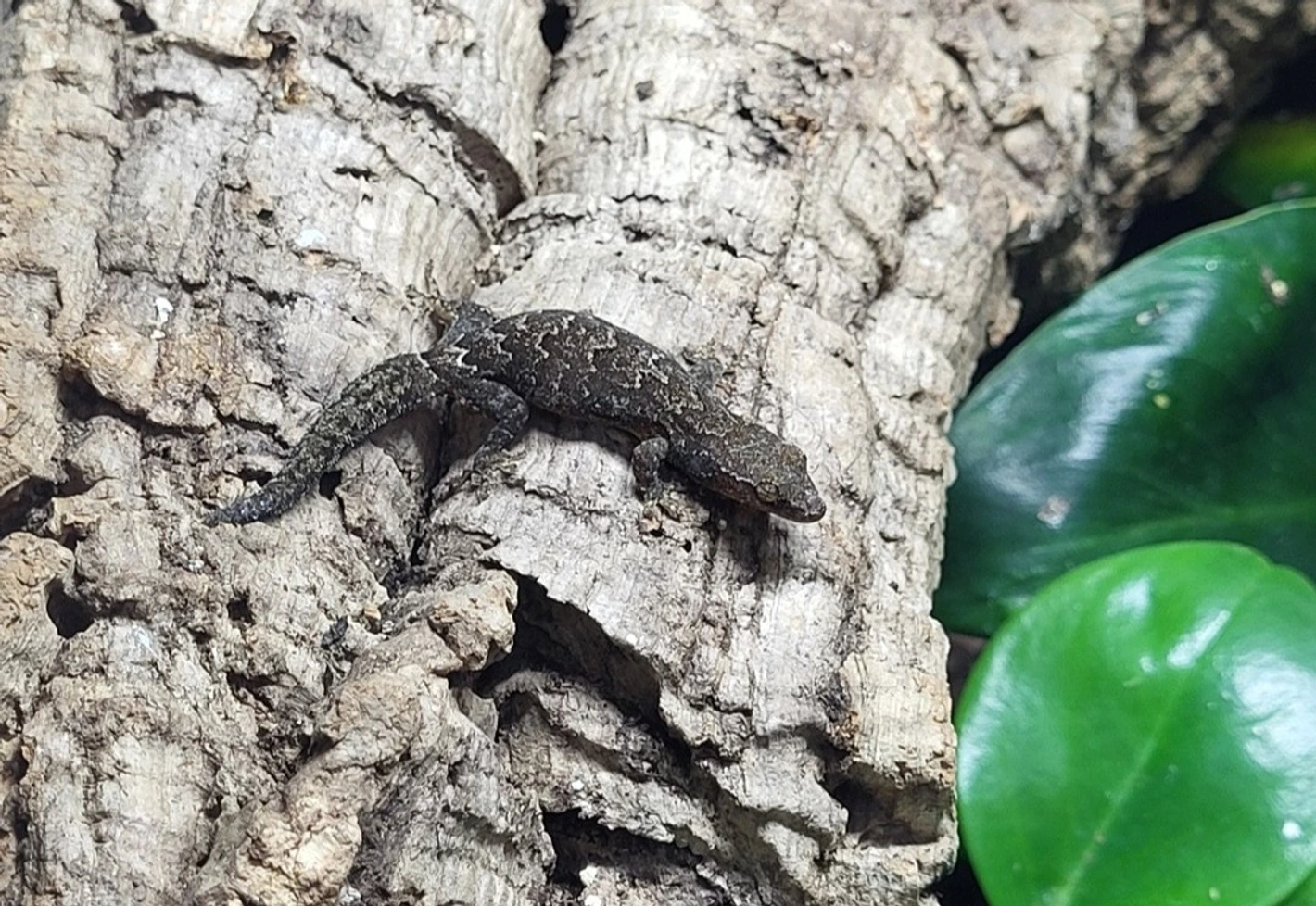
Mourning Gecko Care Guide: Is a Fat Tailed Gecko a Better Fit?
A mourning gecko brings a different kind of interest to a reptile enclosure. Instead of being an animal you regularly take out and hold, it invites you to watch closely. A small movement between leaves, a gecko appearing beside a feeding ledge or an unexpected hatchling can make an established terrarium feel full of activity.
Its small size does not mean ownership requires little thought. Escape prevention, feeding access and reproduction all deserve attention before you bring one home. The enclosure needs to work for the animals living inside it, not simply look attractive from across the room.
If you are also considering a fat tailed gecko, the comparison is useful. These are very different lizards, and the better choice depends on what you want from reptile keeping.
This guide focuses on mourning gecko care while explaining where the African fat tailed gecko differs. It also explores how to compare other gecko species without assuming that one care routine suits them all.
What Is a Mourning Gecko?
The mourning gecko is Lepidodactylus lugubris, a small gecko known for climbing behavior and the ability to reproduce without a male.
Keepers commonly describe adults as approximately three to four inches long, including the tail. Their slender bodies make them appear much smaller than many familiar pet geckos. Firsthand observations in Gecko Time’s mourning gecko account also describe vocalizations and social interactions within colonies.
Those features make them interesting animals to observe, but they also affect practical care. Tiny animals can disappear into small gaps, and a group requires more attention than simply confirming that food is present.
Before buying, ask for the scientific name, approximate age and the number of animals included. If the seller uses a particular line or type designation, ask what that label means rather than assuming it represents a different species.
Good identification is the foundation of good research. It prevents you from accidentally following instructions intended for a much larger or differently adapted gecko.
Mourning Gecko vs Fat Tailed Gecko
In this article, fat tailed gecko refers to the African fat-tailed gecko, Hemitheconyx caudicinctus.
The Oregon Zoo’s African fat-tailed gecko profile describes a nocturnal animal that spends daylight hours sheltered and feeds mainly on insects. It is substantially larger and more robust than a mourning gecko.
The differences are easier to understand side by side.
| Consideration | Mourning gecko | African fat tailed gecko |
|---|---|---|
| Scientific name | Lepidodactylus lugubris | Hemitheconyx caudicinctus |
| General build | Small and slender | Larger, stockier body with a thick tail |
| Enclosure emphasis | Climbing space and dense cover | Usable floor space and sheltered retreats |
| Feeding approach | Suitable prepared gecko food and small insects | Primarily appropriately sized insects |
| Ownership consideration | Escape prevention and unplanned offspring | Space, individual behavior and insect feeding |
| Main appeal | Watching activity within a terrarium | Observing a larger ground-oriented gecko |
Neither animal is a smaller or larger version of the other. Their differences should shape your enclosure, equipment and feeding plan.
If you are still exploring possibilities, use our gecko category as a starting point for comparing listings. Check which species are actually listed rather than assuming every gecko discussed in this guide is available.
Is a Mourning Gecko a Good Pet for You?
Start with your expectations.
Do you enjoy observing an animal without needing to handle it frequently? Are you interested in maintaining a planted enclosure? Would you be comfortable managing tiny feeder insects and potentially caring for offspring?
Those questions matter more than whether someone labels the species easy.
A keeper who enjoys close observation may find a mourning gecko especially rewarding. Someone seeking an animal to hold while relaxing may find the same species frustrating.
Small reptiles can also be difficult to assess from a distance. You need enough patience to observe feeding, notice changes and inspect the enclosure without repeatedly disturbing its inhabitants.
Think about your household as well. Who will maintain the animals if you travel? Can that person safely open an enclosure containing fast, tiny geckos? Will they recognize which doors, vents and access points must stay secured?
Choosing a species should be a practical decision as well as an emotional one. It is perfectly reasonable to admire mourning geckos and decide that another reptile better suits your routine.
Planning a Mourning Gecko Enclosure
A useful enclosure provides climbing routes, concealed resting places and accessible feeding locations.
Begin with the number and size of animals you intend to keep. Then consider whether you can accommodate changes, including offspring or an animal that needs separation.
Rather than buying the smallest enclosure described in a care sheet, plan around usable space. Height has little value if the upper area contains no secure branches, foliage or resting surfaces.
Sketch the interior before purchasing decorations. Mark the feeding areas, water location, access doors and monitoring equipment. Imagine reaching each area for cleaning without dismantling the entire habitat.
A planted enclosure can be attractive, but visibility still matters. You should be able to inspect important resting and feeding areas without stripping away all the cover.
For a first setup, avoid committing to a crowded colony. Have an experienced keeper or reptile veterinarian review your proposed dimensions, stocking level and separation arrangements before introducing animals.
The goal is an enclosure that remains manageable after the excitement of setting it up has passed.
Escape Prevention Comes First
Mourning geckos can use gaps that would not concern the owner of a larger lizard. Hatchlings make that challenge even more important.
Gecko Time’s firsthand account emphasizes checking cable openings and mesh because these small geckos can escape through surprisingly limited spaces.
Inspect the enclosure after every piece of equipment is installed. A secure empty terrarium may no longer be secure once a cable prevents a cover from closing properly.
Check door edges, ventilation panels, drainage access and the spaces around misting nozzles. Use suitable, fully cured reptile-safe materials where modifications are necessary. Do not expose animals to sticky tape or uncured sealants.
Make maintenance deliberate. Gather supplies before opening the doors, work in a closed room and avoid leaving the enclosure unattended.
Security is not a one-time task. Repeat your checks after cleaning, moving equipment or changing the interior layout.
Temperature, Humidity and Lighting
Environmental conditions should be measured, not guessed from how warm or damp the enclosure feels.
Pangea’s mourning gecko care guidance describes daytime temperatures around 77 to 82 degrees Fahrenheit, or 25 to 28 degrees Celsius, with access to cooler areas and a nighttime decrease. It advises keeping a localized basking area no hotter than approximately 85 degrees Fahrenheit, or 29 degrees Celsius.
The same guidance describes humidity around 60 to 70 percent, with temporary increases after misting rather than continuously saturated conditions.
These figures describe different parts of an environmental plan. They are not a reason to heat every corner to the highest temperature or keep the enclosure permanently wet.
Use a thermostat appropriate to any heating equipment and independent instruments to check actual conditions. Record readings at different heights and times of day.
A room can change substantially between morning and afternoon. Sun through a window, nearby appliances and seasonal weather can all affect the enclosure.
Lighting deserves similar attention. In ReptiFiles’ firsthand mourning gecko lighting guidance, the author describes observing geckos using UVB and warns that animals may climb directly beneath lamps onto the enclosure’s top mesh.
That means lamp placement must account for the closest point a gecko can reach, not only the branch you expect it to use. Provide shaded retreats and a regular day-night cycle.
Furnishing the Habitat
Choose furnishings for function before appearance.
Branches should connect useful areas. Cover should allow an animal to withdraw from view. Feeding locations should be easy to find and easy for you to clean.
Avoid placing every desirable resource in one exposed corner. In a group enclosure, several accessible feeding locations can make it easier to observe whether all animals are getting opportunities to eat.
Check that plants and decorations do not prevent doors from closing. Leaves can grow into tracks, and lightweight items may shift during maintenance.
If using live plants, investigate the plant’s suitability and its treatment history before introduction. Do not assume a decorative plant from a shop is ready to place directly with reptiles.
Keep a simple record of additions to the enclosure. If a problem appears after a new plant, substrate or decoration is introduced, knowing the timing may help you investigate.
A well-designed enclosure should be interesting without becoming impossible to inspect.
Does the Enclosure Need to Be Bioactive?
A bioactive enclosure uses living components, such as plants and decomposer organisms, as part of its maintenance system. It does not mean the enclosure cleans itself.
You still need to remove spoiled food, inspect water and feeding containers, monitor moisture and check the animals.
If you enjoy plant care and learning how the enclosure functions, a bioactive approach may appeal to you. If you prefer a simpler arrangement that is easier to inspect, that is a valid choice too.
Do not choose a setup because it looks impressive in photographs. Choose one you can maintain reliably.
Build complexity gradually. It is easier to understand a change in humidity, plant health or cleanliness when you know how the enclosure behaved before that change.
What Does a Mourning Gecko Eat?
A mourning gecko feeding plan typically combines appropriately sized insects with a suitable formulated gecko diet.
Pangea describes feeding prepared gecko food alongside small, gut-loaded and supplemented insects. Gut loading means feeding the insects appropriately before they are offered to the reptile.
Confirm that a prepared food is intended as a suitable diet, rather than a fruit treat. Mashed fruit or baby food should not be mistaken for a complete replacement.
Ask the seller what the animals currently eat and how feeding success is monitored. Obtain the product name, feeder sizes and routine instead of accepting a vague statement that they eat gecko food.
For supplements, consider the prepared diet, insect feeding and UVB provision together. Follow product directions and obtain qualified advice rather than combining several vitamin products indiscriminately.
Set up feeding cups where they remain accessible and can be inspected. Offer fresh food according to its instructions and remove leftovers before they spoil.
With small animals, a feeding record can be especially helpful. Note what was offered, where it was placed and whether feeding was observed.
How a Fat Tailed Gecko Diet Differs
An African fat tailed gecko should not automatically receive the same fruit-based prepared food used for a mourning gecko.
Oregon Zoo identifies insects as the principal food in its diet. That difference matters when choosing between the species.
If you keep both, label foods and supplements clearly. Write separate instructions for each enclosure so that a helper does not assume all geckos eat the same thing.
Before acquiring an insect-eating reptile, confirm that you have dependable access to suitable feeders. Consider storage, feeder care and what you will do if a delivery is delayed.
Feeding convenience is a legitimate factor in choosing a pet. It is better to consider it before purchase than discover later that the required routine does not fit your household.
Reproduction Without a Male
One of the most important facts about mourning geckos is their ability to reproduce through parthenogenesis.
In practical terms, a female can produce offspring without mating with a male. Zoo Basel’s mourning gecko information explains this reproductive process.
Keeping an animal alone therefore does not guarantee that you will never have babies.
That possibility should be part of your original plan. Think about suitable hatchling housing, tiny feeder insects, monitoring and responsible placement of offspring.
Do not assume that more animals can simply remain in the same enclosure indefinitely. Available space and management capacity need to guide your decisions.
Ask a prospective seller about the animals’ reproductive history and whether eggs may already be present on any included furnishings.
Before buying a colony, decide what you will do if it grows. A realistic plan is more useful than hoping reproduction will remain slow enough to ignore.
Managing Groups, Eggs and Hatchlings
Mourning geckos are often maintained in groups, but grouping does not remove the need to monitor individuals.
Firsthand observations published by Gecko Time describe social hierarchies and interactions that can include dominance behavior. Watch for animals that repeatedly lose access to resources or appear to decline.
Keep a suitable separation enclosure available rather than trying to improvise one after a problem develops.
Egg management also requires care. Pangea explains that eggs may be firmly attached to laying surfaces and that attempts to peel them away can break them.
Do not remove eggs casually during cleaning. Photograph their location and seek experienced guidance on safe protection or incubation arrangements.
Hatchlings require particular planning because of their size. Feeding equipment and enclosure openings that work for adults may not work for newly hatched animals.
Adults may also eat hatchlings, as documented in keeper accounts. Obtain advice on separation rather than assuming a mixed-age colony is automatically safe.
Never release unwanted geckos or allow them to escape as a way of managing numbers. Arrange responsible captive placement and keep accurate records of any transfers.
Handling and Observation
A mourning gecko is generally better suited to observation than routine hands-on interaction.
Gecko Time’s keeper account emphasizes how delicate and fast these animals are. Necessary movement should be carefully prepared rather than improvised by chasing an animal around the enclosure.
For routine transfers, ask an experienced keeper to demonstrate a secure container-based approach. Prepare the destination first and keep the working area controlled.
Never grab a gecko by its tail. Do not keep attempting capture simply because an animal is difficult to reach.
Observation offers its own rewards. You may begin recognizing preferred resting places, individual markings and patterns of activity.
Keep brief notes when something changes. An animal using a different hiding place is not automatically ill, but a record can help you distinguish an isolated event from a continuing pattern.
If frequent handling is important to you, discuss that expectation honestly when comparing species. A larger gecko is not automatically willing to be handled, and individual behavior always matters.
Hygiene and Veterinary Planning
Prepare for veterinary care before you need it.
Find a clinic that treats reptiles and confirm whether it can assess very small geckos. Save the contact details and ask about urgent-care arrangements.
Changes such as persistent food refusal, noticeable weight loss, injury, breathing difficulty or difficulty moving deserve professional attention. Do not attempt medication based only on a photograph or an online discussion.
The Merck Veterinary Manual’s reptile husbandry guidance emphasizes appropriate environmental management, nutrition and disease prevention. New arrivals should have a quarantine plan developed with professional guidance before joining an established collection.
Human hygiene is equally important. The CDC’s reptile safety guidance explains that healthy-looking reptiles can carry Salmonella.
Wash your hands after handling animals, feeder insects or enclosure equipment. Keep reptile supplies away from food-preparation areas, and take additional precautions around young children and people at higher risk of infection.
Written cleaning instructions are useful if more than one person helps with care.
Considering a Larger Arboreal Gecko
Someone attracted to a mourning gecko’s climbing behavior may also become interested in larger arboreal species.
A leachianus gecko, Rhacodactylus leachianus, represents a very different commitment. Breeder Kanaky Reptiles’ leachianus guidance describes a large, tree-dwelling gecko requiring substantial climbing space and careful housing arrangements.
Its requirements should be researched independently. It is not suitable for a mourning gecko enclosure, and the species should never be housed together.
For readers exploring this different direction, our dark morph leachianus gecko listing provides one page to review. Confirm the individual animal’s documented details and current availability directly.
The Snowflake Nu Ana leachianus gecko listing offers another starting point for research. Ask what any locality or descriptive label means and what records support it.
These are separate species choices, not upgrades that automatically suit someone who enjoys mourning geckos.
Questions to Ask Before Buying
A clear conversation with the seller should happen before payment.
Ask whether photographs show the actual animals being offered. Confirm the number included, their approximate age and whether they are captive bred.
Request feeding details and any known health or treatment history. For a group, ask how the animals have been housed and whether conflict or separation has been necessary.
Clarify whether eggs or hatchlings may accompany plants or furnishings. This is particularly relevant with mourning geckos because reproduction may continue without an intentional pairing.
Review delivery arrangements and the seller’s actual terms. Ask what happens if weather makes transport unsuitable and what information you will receive before arrival.
Do not allow an attractive price to replace these checks. An animal with incomplete information may require more preparation than you initially expected.
If the answers leave significant uncertainty, pause and ask more questions.
Budgeting for Long-Term Care
The purchase price is only part of the cost.
Include the enclosure, lighting, monitoring equipment, any heating controls, furnishings, food and veterinary access in your initial budget. Allow for replacement equipment and backup housing.
For mourning geckos, consider the cost of caring for hatchlings. Small animals still require secure housing, suitable food and regular attention.
For a fat tailed gecko, consider the ongoing availability and cost of appropriately sized insects. Do not assume the routine will be identical to feeding a prepared gecko diet.
Also budget your time. Cleaning, checking instruments, preparing food and observing animals are recurring responsibilities.
Write a short care sheet for anyone who may help while you are away. Include feeding instructions, equipment settings, escape precautions and the veterinarian’s contact details.
A sustainable routine is one that another responsible person can understand when necessary.
A Practical Arrival Checklist
Finish and test the enclosure before arranging arrival.
Run the equipment through several daytime and nighttime cycles. Check readings after misting and during the warmest part of the day.
Make sure all doors, vents and access points remain secure with equipment installed. Prepare a separate, appropriate enclosure if quarantine or separation is needed.
Have the correct foods ready. Do not wait until the animals arrive to discover that the feeder insects available locally are too large.
Organize the seller’s information into one record, including identification, feeding history and transport details.
Plan a quiet arrival period. Avoid unnecessary photography, handling or rearrangement while the animals settle.
Finally, confirm who is responsible for each daily task. Clear responsibility prevents the common problem of everyone assuming someone else has already checked the enclosure.
Frequently Asked Questions
Is a mourning gecko the same as a fat tailed gecko?
No. They are different species with different body sizes, enclosure priorities, feeding requirements and reproductive biology. Research each independently.
Can mourning geckos reproduce without a male?
Yes. Parthenogenesis allows females to produce offspring without mating with a male. Plan for this possibility even if you are not deliberately breeding them.
Can mourning geckos and fat tailed geckos live together?
No. They should have separate, species-appropriate enclosures. Similar common names do not make mixed housing safe.
Is a mourning gecko suitable for children?
It can be interesting for supervised observation, but an adult should manage care. Its small size, speed and fragility make it a poor choice for casual handling by children.
Does a planted enclosure eliminate cleaning?
No. Plants and decomposer organisms do not remove the need to inspect the enclosure, remove spoiled food and maintain feeding and water containers.
Is a leachianus gecko a larger mourning gecko?
No. It is a different species with its own space, behavior and management requirements. Compare the animals thoughtfully rather than transferring one care sheet to the other.
Choosing the Gecko That Fits Your Home
A mourning gecko can be an excellent match for someone who enjoys observing a carefully maintained terrarium. Its small size, activity and unusual reproduction offer plenty to learn about, but they also bring practical responsibilities.
An African fat tailed gecko offers a different experience. Its larger, ground-oriented build and insect-based diet should lead to a separate enclosure and care plan.
The right choice depends on the animal’s needs and your ability to meet them consistently.
Take time to compare species, prepare equipment and ask informed questions. You do not need to choose the first animal that catches your attention.
Visit Celestial Reptiles to explore the site and continue your research. Let preparation guide the purchase, and choose a gecko whose long-term care genuinely fits your home.